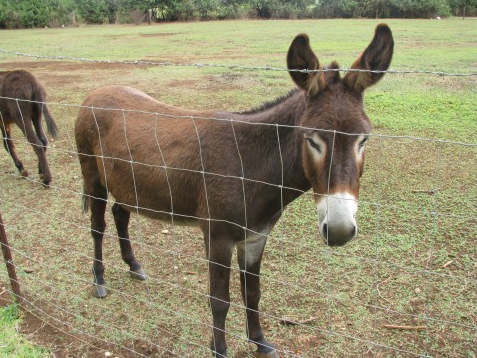
Eight donkeys in the Indian state of Uttar Pradesh recently made world news. They were arrested and detained for four full days after getting caught munching on exotic plants outside of the town jail. Local authorities, who had previously told the donkeys' owner to keep the animals confined, were dog-tired from issuing so many repeated warnings. Costly damage to the town's expensive greenery was reason enough to take swift action, not against the negligent owner, but against the equine perpetrators of the crime. The donkeys were rounded up and jailed until a local political leader helped secure their release. Upon leaving the jail, the donkeys looked penitent and contrite, except for one who delighted in regaining his freedom with a bit of celebratory prancing.
These donkeys never had to defend their actions in a court of law, nor were they called upon to right their wrongs. Granting them their freedom is an entirely rational end to this story, but assigning animals agency and holding them accountable for their actions was once considered completely appropriate. In Europe, throughout the Middle Ages, putting animals on trial was commonplace, although some dispute just how common it was. Regardless, animal trials did take place and punishment for the accused was often severe. Pigs, who frequently killed or maimed children, received the harshest sentences -- mutilation and execution – while animals who fell victim to bestiality were commonly pardoned for committing criminal acts against their will. Insects, rodents, and other pets were also brought to justice for destroying crops or gardens, but the punishment they received was typically limited to condemnation by the church.
Bringing animals to justice through formal court proceedings is bizarre to us in the twenty-first century, but, at a time when people lived closely among animals, keeping them as livestock and beasts of burden, it made more sense to treat them as free agents, entitled to access the justice system on an equal footing with their human caretakers and counterparts.
To learn more about animals on trial, please visit the links below.
- Animals on Trial: Formal Legal Proceedings, Criminal Acts, and Torts of Animals, In Custodia Legis, Law Library of Congress, February 9, 2016,
- The Truth and Myth Behind Animal Trials in the Middle Ages, Atlas Obscura, August 10, 2015
- Fantastically Wrong: Europe’s Insane History of Putting Animals on Trial and Executing Them, Wired, September 2, 2014
- Beastly Justice, Slate, February 21, 2013
For additional resources in the Harris County Law Library’s digital collection, please look for the following titles in our HeinOnline database (or at the links below).
- The Historical and Contemporary Prosecution and Punishment of Animals by Jen Girgen, 2003
- Prosecution and Punishment of Animals and Lifeless Things in the Middle Ages and Modern Times
- The Criminal Prosecution and Capital Punishment of Animals (Legal Classics Library) by Edward Payson Evans, 1906