

Each year on September 8, International Literacy Day invites us to consider the importance of literacy in our lives and communities. This year, UNESCO marks the 60th anniversary of this event with a broad theme: Literacy for People, the Planet and Prosperity. This theme presents an opportunity to think expansively about what literacy means, not only in terms of language fluency—reading and writing—but in navigating all aspects of modern life proficiently: using technology, staying informed, thinking critically, and knowing how the legal system impacts daily life.
What is Legal Literacy?
What does it mean to be legally literate?
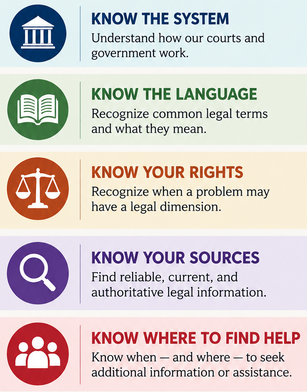
It does not mean memorizing statutes, mastering legal terminology, or learning to “think like a lawyer.” For most of us, legal literacy means something more basic: understanding enough about our legal system to recognize a legal issue, make sense of legal information, know where to look for reliable answers, and participate meaningfully in civic life.
That begins with basic civics. An informed public benefits from understanding the three branches of government, the relationship between federal and state governments, and the different roles played by legislatures, courts, and administrative agencies. Concepts such as separation of powers, due process, judicial review, and checks and balances help us understand events reported in the news every day.
Legal literacy also means knowing some of the basic language of law. What distinguishes a civil case from a criminal prosecution? What is an appeal? What is precedent? What are our rights? It is also recognizing that our laws are, essentially, the operating system of our nation. Having access to the primary law that defines how we are governed, as well as the information and resources that keep us informed and engaged is key to legal literacy. Providing that access is what we do at the Law Library.
How does the Law Library help people develop legal literacy?
We help people recognize when an everyday problem—an eviction notice, a debt collection letter, a contract dispute, or an encounter with law enforcement—may have legal consequences. We guide library visitors to locate trustworthy information, reliable research tools, and referrals to legal assistance. The Law Library helps people become more capable navigators of a legal system that belongs to all of us. The resources we offer assist people in exercising their rights, making informed decisions, participating in their communities, and engaging with the institutions that govern them.
In a nutshell, law libraries support not only access to information, but also provide the tools to equip the people. Understanding our rights, the institutions that shape our civic life, and the role we all play in our system of government is, indeed, a form of Literacy for People, the Planet and Prosperity. Join us in recognizing the annual event—International Literacy Day—by getting and staying informed with legal resources at the Harris County Robert W. Hainsworth Law Library.