


Constitution Day is observed each year on September 17 to commemorate the signing of our Constitution in 1787. On display in the Law Library lobby throughout the month of September is an exhibit featuring foundational documents that shaped the Constitution, including the Declaration of Independence and the Articles of Confederation, along with examples of broadsides that were crucial to the states’ decisions to ratify our founding document.
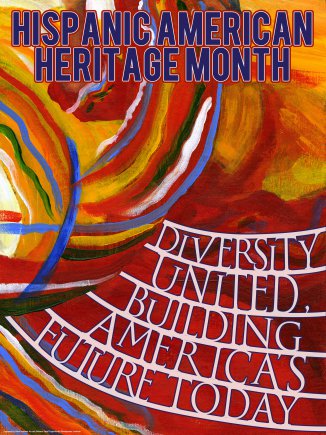
Hispanic Heritage Month
https://www.army.mil/article/87962/army_aims_outreach_at_hispanic_community
Saturday, September 15, marks the independence day of five Latin American countries: Costa Rica, El Salvador, Guatemala, Honduras and Nicaragua. Mexico, Chile, and Belize follow shortly after, on the 16th, 18th and 21st. The Harris County Law Library extends Happy Independence Day wishes to the more than 57 million Americans, and roughly 11 million Texans, who claim Hispanic roots. We would also like to commemorate Hispanic Heritage Month, which runs from September 15 through October 15, by recognizing the contributions of several of our era’s high-profile Hispanic lawyers, including Supreme Court Justice Sonia Sotomayor; former Attorney General Alberto Gonzales; United States Senators Ted Cruz and Marco Rubio; New Mexico Governor, Susana Martinez; and former Director of Intergovernmental Affairs under President Obama, Cecilia Muñoz. We also honor the trailblazers who came before, including the rich history of Latina and Latino lawyers practicing before the United States Supreme Court.
National Bar Associations
State and Local Bar Associations
Judicial Review

Justice John Marshall was the first to flex SCOTUS's Judicial Review muscle.
There is a commonly held, but incorrect, belief that Judicial Review in the United States began with Marbury v. Madison, 5 U.S. (1 Cranch) 137 (1803). While this ruling marked the first time the Supreme Court held a law passed by Congress to be unconstitutional, the roots of Judicial Review in our land go even deeper, stemming beyond the Constitutional Convention, beyond Federalist No. 78, and even beyond 18th century British colonization in North America.
Jamestown, the first successful, permanent British settlement in North America, was established by the Virginia Company of London in 1607. Puritan separatists landed near Plymouth Rock in 1620. Judicial review existed in some form or another in 17th century England until William of Orange overthrew James II in 1688, but remained in the collective consciousness of the geographically separate North American colonists. By the time the Constitutional Convention rolled around in 1787, a majority of the newly formed states had already witnessed the power of Judicial Review exercised by their own supreme courts.

Despite dying in Greenwich Village in 1804, Alexander Hamilton can now be seen nightly on Broadway.
Though the Federalists and the Anti-Federalists argued over the level of power the Federal Judiciary should be able to wield over the co-equal Executive and Legislative branches, the record is clear that Judicial Review was a foregone conclusion on both sides, and the question was one of limitation. Jefferson fretted that the Judicial Branch would become the ultimate arbiters of what is or is not Constitutional, and would rule like oligarchs. Hamilton argued that the Judiciary was the weakest branch, and that its existence would ensure its own continued weakness by encouraging the Legislative and Executive Branches to preemptively conform their works to Constitutional restraints.

The 1953 Warren Court attempted to desegregate American schools through its Brown ruling.
While concern has always existed that judges would be able to enforce the opinions of a tyrannical minority, some scholars argue that centuries of Congressional intransigence has been offset by the Judiciary’s ability to apply majority consensus to the laws of the land when the other branches are unable to act. One example of this is Brown v. Board of Education of Topeka, 347 U.S. 483 (1954), which aimed to desegregate American public schools. Majority opinion within the nation supported desegregation, but political considerations hamstrung both Congress and the President.
Learn more:
Celebrating San Jacinto Day
Today is San Jacinto Day! We, along with many others across the state, turn our thoughts to the final battle of the Texas Revolution that took place on April 21, 1836. The victory paved the way for a new government to form under the 1836 Constitution of the Republic of Texas and the rest is legal research.
To celebrate the day, we're offering a #shelfie opportunity the week of April 23 at the Harris County Law Library. Grab your phone and take a #shelfie in front of our monographic replica of the San Jacinto Monument. Be sure to post it to Twitter and tag it #SanJacintheStacks!
National Poetry Month: Poetry of the Bench & Bar


April is National Poetry Month, and the Harris County Law Library is celebrating. We're shining a spotlight on the Poetry of the Bench and Bar with an exhibit featuring poetic judicial opinions and poems written by and about attorneys. Visit the Law Library all month long to view the exhibit.