

Throughout history, individuals and groups have produced tracts, essays, manifestos, and open letters intended to influence public opinion or explain complex legal and political questions to broader audiences. The format was often simple: inexpensive paper, straightforward printing methods, and distribution by hand or public posting. One could even argue that America’s most famous “zine” was a series of 85 essays published in newspapers between 1787 and 1788 known today as The Federalist Papers.
Read moreApril is Immigration & Citizenship Law Resources Month
This month, the Harris County Robert W. Hainsworth Law Library is highlighting immigration law resources available through the library. Whether you are researching immigration procedures, looking for authoritative legal commentary, or seeking self-help legal information, the library offers materials designed to help patrons better understand this area of law.
Read moreLeading with Purpose: Mariann Sears, First Woman Director of Harris County Hainsworth Law Library

Each March, Women’s History Month offers an opportunity to reflect on the leaders who have shaped institutions and strengthened communities. At the Harris County Robert W. Hainsworth Law Library, that reflection includes the remarkable leadership of Mariann Sears, whose tenure as Director marked a historic moment in the library’s long history.
Read moreFebruary is Elder and Disability Law Resources Month
Elder law and disability law are closely related areas of legal practice that focus on protecting the rights, autonomy, and well-being of older adults and people with disabilities. In Texas, these legal issues intersect with state-specific laws, public benefits programs, and agencies that can be difficult to navigate without reliable information and planning. This brief overview introduces key topics in Texas elder and disability law and points readers toward trusted resources for learning more.
Read moreJanuary is Consumer Law Resources Month
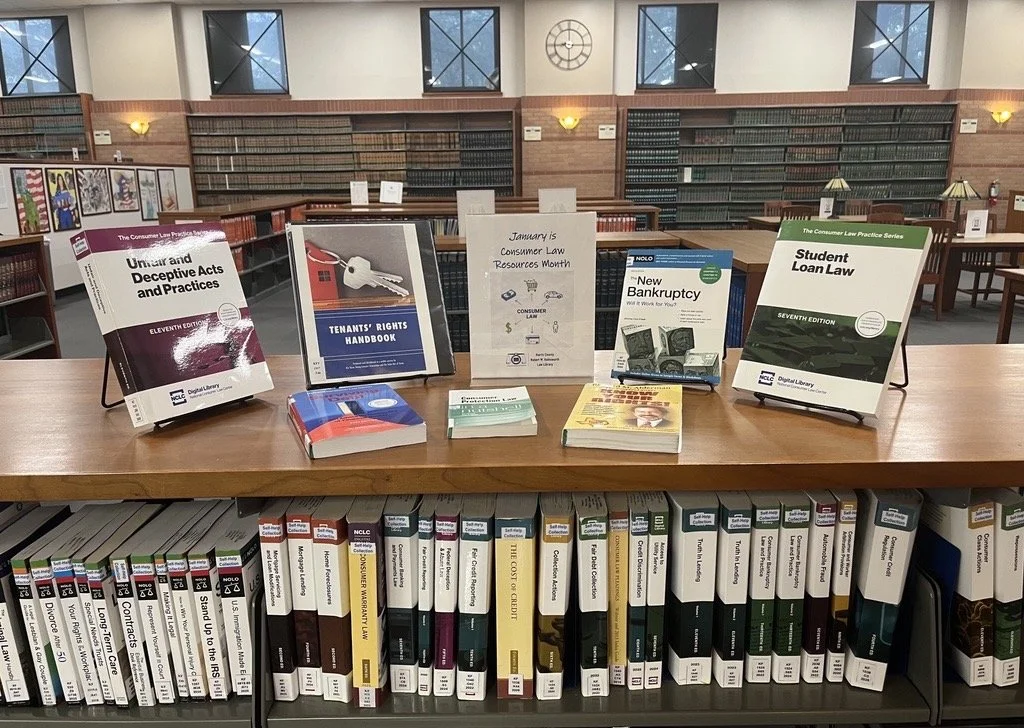
January is Consumer Law Resources Month at the Harris County Law Library. Consumer law focuses on protecting individuals in everyday transactions—when buying goods or services, dealing with debt collectors, credit reporting issues, or resolving landlord-tenant disputes. In Texas, many of these protections come from laws like the Texas Deceptive Trade Practices–Consumer Protection Act (DTPA), which prohibits false, misleading, or deceptive business practices. At the federal level, agencies such as the Consumer Financial Protection Bureau (CFPB) and nonprofit advocacy organizations—including the National Consumer Law Center (NCLC)—play a key role in enforcing consumer protections, developing policy, and providing educational resources for consumers and advocates alike.
Read more