

The Harris County Robert W. Hainsworth Law Library celebrates International Zine Month: Read One, Take One, Make One!
July is International Zine Month, a celebration of self-publishing, independent voices, and creative expression. Visitors to the Harris County Robert W. Hainsworth Law Library may notice our current exhibit highlighting zines and other small-format publications that have given ordinary people a way to share ideas outside of traditional publishing channels.
Although many people associate zines with music scenes, fan communities, or contemporary activism, the practice of producing inexpensive, independently distributed publications has a much longer history—one that intersects in fascinating ways with law, government, and civic life.
Long before photocopiers and desktop publishing, communities relied on broadsides, pamphlets, one-sheet serial publications, and handbills to circulate information quickly and inexpensively. These publications announced new laws, public notices, court proceedings, elections, and governmental proclamations. Printers posted notices in marketplaces, taverns, courthouses, and public squares, creating an early form of public information sharing that helped connect citizens to the legal systems that governed them.
Some publications were meant to inform, while others sought to persuade. Throughout history, individuals and groups have produced tracts, essays, manifestos, and open letters intended to influence public opinion or explain complex legal and political questions to broader audiences. The format was often simple: inexpensive paper, straightforward printing methods, and distribution by hand or public posting.
One could even argue that America’s most famous “zine” was a series of essays published in newspapers between 1787 and 1788 under the collective pseudonym “Publius.” Known today as The Federalist Papers, these eighty-five essays were written to explain and advocate for the proposed United States Constitution. Although they eventually became one of the most influential works in American legal history, they began as serialized pieces intended for ordinary readers following a public debate about constitutional government.
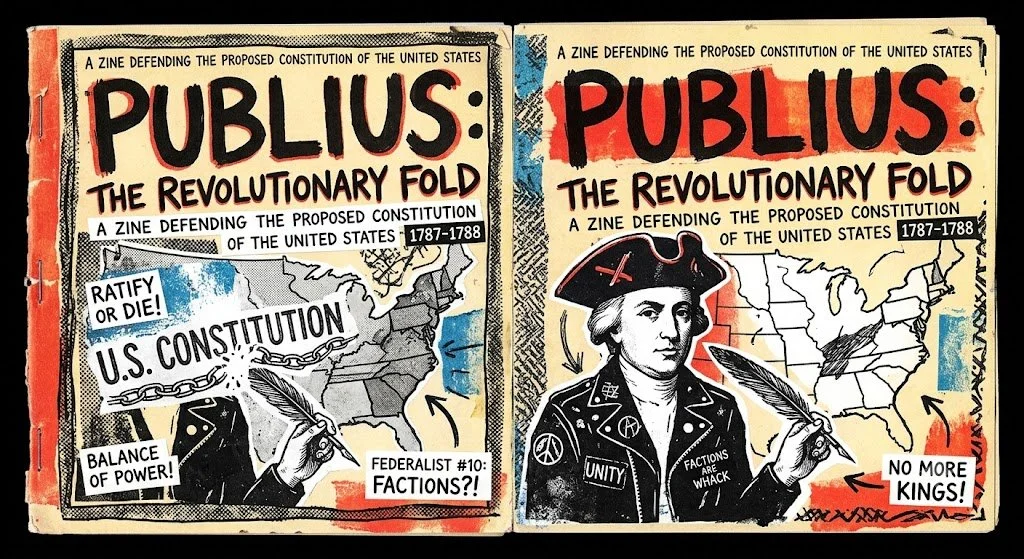
The comparison is admittedly imperfect—Alexander Hamilton, James Madison, and John Jay probably did not envision themselves as zinesters—but the underlying principle feels remarkably familiar: complex ideas shared directly with readers through accessible, low-cost publication.
Modern zines continue this tradition of democratized publishing. Whether produced with photocopiers, home printers, collage materials, or digital tools, zines allow individuals to document experiences, explain specialized topics, and contribute to conversations that matter to their communities.
For law libraries, these publications serve as reminders that legal information has never belonged exclusively to official reporters, casebooks, or commercial publishers. From courthouse broadsides to constitutional essays to photocopied booklets passed from hand to hand, the history of legal publishing includes a rich tradition of independent voices finding ways to be heard.
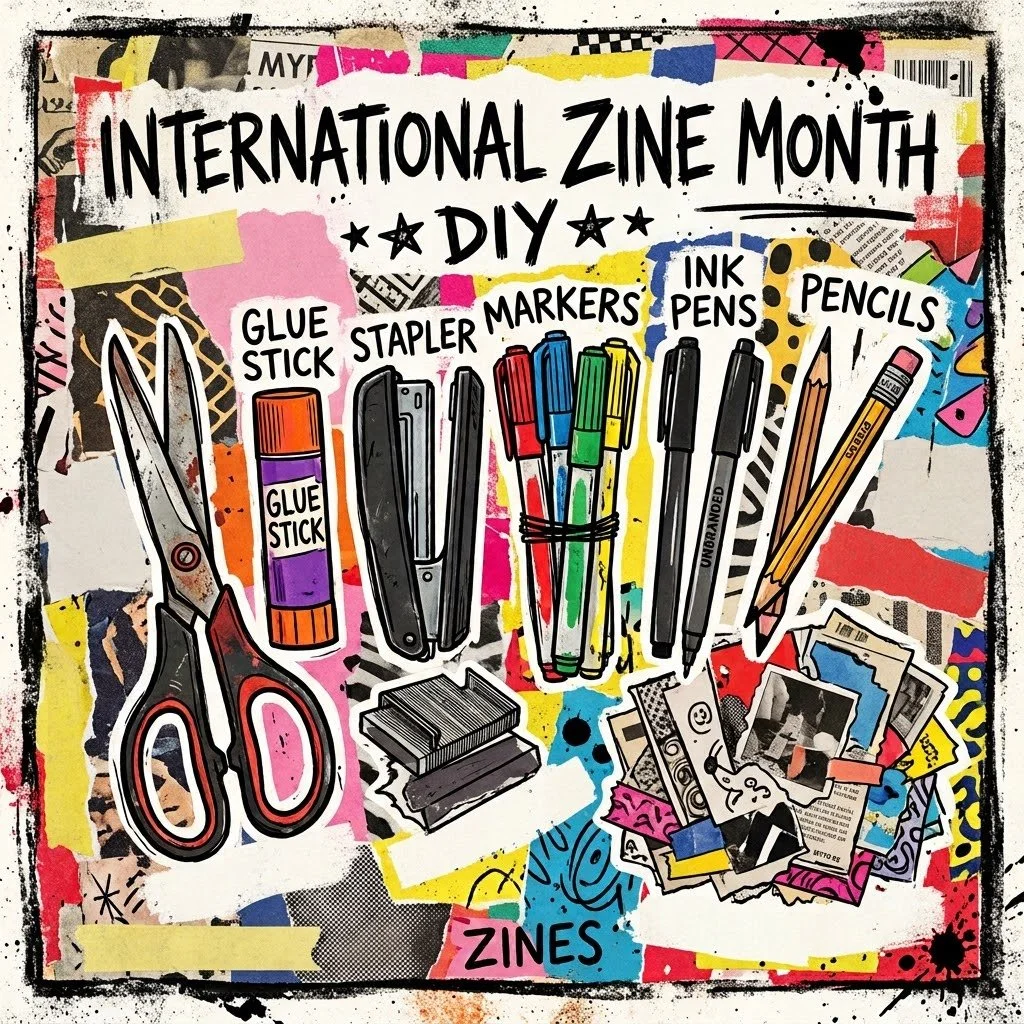
If you visit the library this month, we invite you to explore our International Zine Month exhibit and consider the many forms legal publishing has taken over the centuries—and perhaps imagine what future legal historians will make of today's DIY publications.
Further Reading
Zines at The Library of Congress - The Library of Congress
A Brief History of Zines and Why You Should Make One - Medium.com
Cut, Paste, Publish: The Production and Consumption of Zines - State of the Art Conference, Athens, Georgia (2021)
Featured Titles (HCPL)
Need a Harris County Public Library Card? Sign up today at our location or at any branch.
Make a Zine! Start Your Own Underground Publishing Revolution - Available for checkout at HCPL
Whatcha Mean, What’s a Zine?: The Art of Making Zines and Minicomics - Available via the Internet Archive and for checkout at HCPL
Zine Making & Book Binding: A Beginner’s Guide in 25 Projects - Available for checkout at HCPL
Tools
Heyzine Flipbook Maker - Free PDF to flipbook, no ads and highly customizable. Share, download, or embed.
Zine Arranger - Convert a multi-page PDF into a zine! Folding instructions included
How to Make a Zine - The Library of Congress
How to Make a Zine - University of Texas Libraries
Local Resources
Scissors of Texas - Houston-based monthly meet-up focused on collage.
Zine Club at WanderLikeWonder, a creative community hub in Midtown.
Zine Fest Houston - November 21, 2026, at The Orange Show. Registrations will open in August 2026.