National Taco Day: Let's Taco 'Bout Tacos

How your Harris County Law librarians spend their weekends.

How your Harris County Law librarians spend their weekends.

This Sunday, October 4, Americans will set aside their differences and join together in honor of the humble but mighty taco. We owe this annual celebration to a Texan, Roberto L. Gomez.

Gomez, a San Antonian, was a force in the 1960 “Viva Kennedy!” JFK campaign movement in the southwest. Once Kennedy was in office, Gomez used his connection to the President’s brand to promote various Mexican foods familiar to the San Antonio community, starting in 1961 when he sent President Kennedy a 48 pound tamale, guarded by a motorcade, as a birthday gift. Gomez continued to build on this idea, and in 1965 he sent President Johnson, a dedicated Texan, a 55 pound taco. Shortly thereafter, Gomez helped found the National Taco Council. In 1968, San Antonio’s Congressman Rep. Henry B. Gonzalez stood on the floor of Congress and called for the first National Taco Day to occur that year on May 3. After some hopping around, in 2004 National Taco Day landed on October 4.

Some have speculated that the taco, in its perfect simplicty, must have come to us from deep in the past. In reality, it’s a modern miracle; an early example of fast food, born of industrialization and the need for a quick lunch break.

The taco’s origins are in 18th century Mexico, where silver miners toiled in caves. To extract silver, they would wrap a bit of gun powder in a piece of paper, then slide that into a crack in the rock face. They referred to the gun powder and paper wrap as a “taco.”

Then at some point in the 19th century, a genius Mexican mind, now anonymous due to the fog of history, decided to mimic this by wrapping meat inside a tortilla, and called their culinary innovation a “miner’s taco.”

Fast forward to San Antonio in 1905, where historians have found the first recorded mention of this food taco in the United States. The taco, a true and authentic Mexican food, likely came to San Antonio with Mexican migrants coming for work. It was one of the exotic examples of Mexican cuisine served by so-called “Chili Queens,” whose pushcarts provided Americans with an opportunity to sample culinary life south of the border.

If you travel to Mexico, don’t expect to find a hardshell taco. The crunchy, u-shaped taco shell was an innovation of United States entrepreneur Glen Bell in the 1950s, as he came up with the idea to sell gringo-friendly “Mexican food” to the masses through a franchise business he called Taco Bell.

Another American franchise operation, Subway, made international news yesterday when an Irish court ruled its baked loaves are too confectionery to legally be called “bread.” Is there a similar legal defintion in the United States of a taco?

The answer is that while lawmakers here have yet to define what a taco is, a Worcester County Superior Court in Massachusetts ruled in 2006 that a taco is NOT a sandwich. Thus the taco continues to reign supreme in its own right.

Further Exploration:

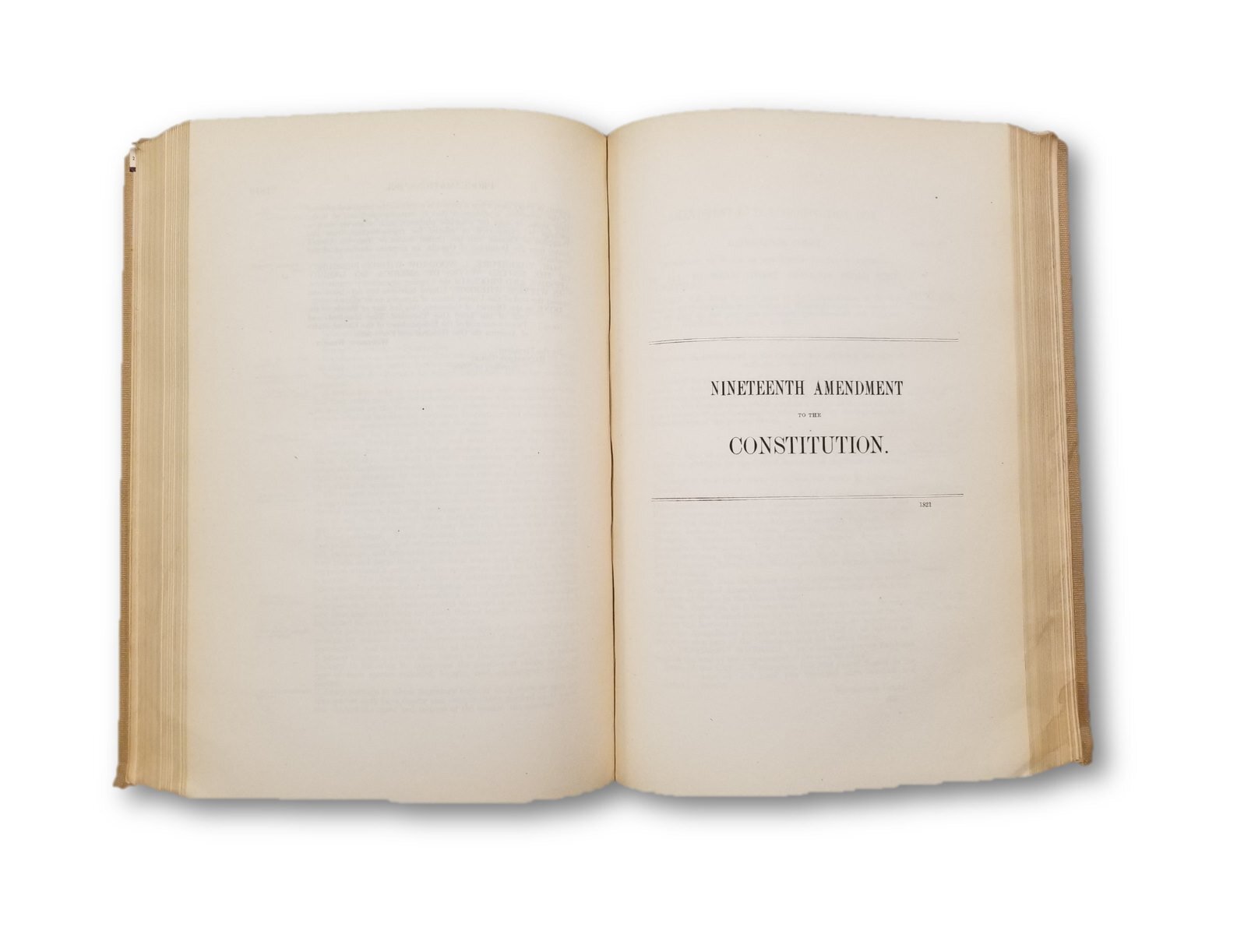
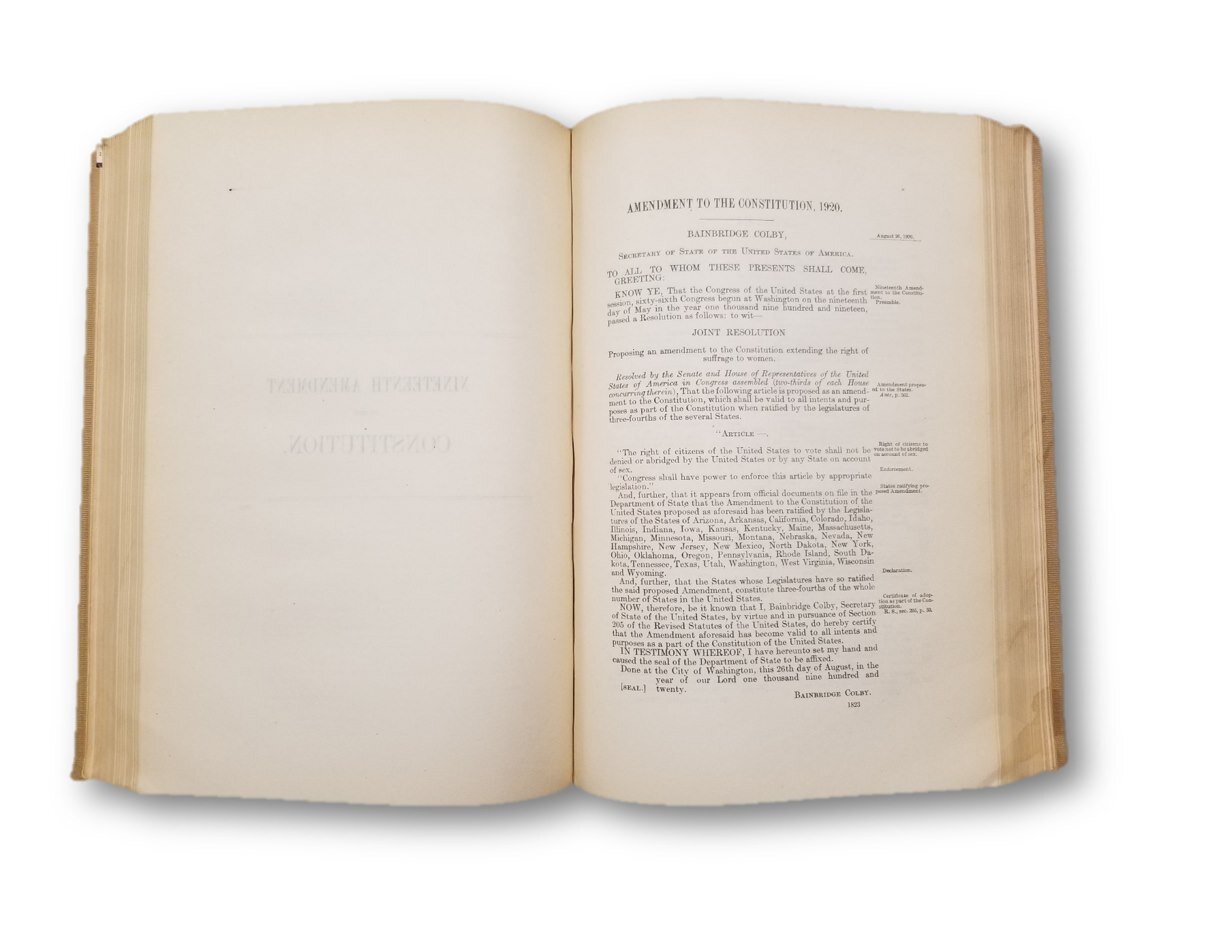
Harris County Law Library Offers 19th Amendment Centennial Symposium to All

For Immediate Release
August 14, 2020

The Harris County Law Library announces a virtual 19th Amendment Centennial Symposium on Tuesday, August 18, from 2pm to 4pm. The event, titled “Votes for Texas Women,” will focus on the history of women’s suffrage and the importance of inclusion in law and government.

“We are thrilled to offer this educational opportunity to everyone on the 100th anniversary of the day the 19th Amendment was ratified,” Law Library Director Mariann Sears said. “We hope that sharing the stories from the historical and legal texts of the brave women who fought for the right to vote by protesting and reaching out to their representatives, even as the 1918 pandemic raged on, can connect more people with the rich history surrounding the amendment.”

Mariann Sears, the first woman to serve as director of the Law Library, will welcome three distinguished women from the local legal community to share their expertise. Marie Jamison, a partner at Wright Close & Barger, will share her research into the history of the 19th Amendment and the progress made in the century that followed. Professor Renee Knake Jefferson, the Joanne and Larry Doherty Chair in Legal Ethics Director at University of Houston Law Center and author of Shortlisted: Women in the Shadows of the Supreme Court, will discuss her research concerning the overlooked history of the nine women who were shortlisted for nomination to the U.S. Supreme Court, but not nominated between the 1930s and 1980s. Justice Frances Bourliot, Fourteenth Court of Appeals Texas, will discuss the importance of inclusion on the bench and her experience as an appellate justice.

“The passage of the 19th Amendment, which prohibited denying a person the right to vote on the basis of sex, was an important step toward protecting voting rights in America,” County Attorney Vince Ryan said. “We are pleased with the Law Library’s efforts to celebrate the legacy of women’s suffrage and the contributions of women in law and government over the last century.”

Registration is now open and free to all at https://www.harriscountylawlibrary.org/19thamendment. The program is accredited by the State Bar of Texas for 2.0 hours of continuing legal education credit with 1.0 hour of ethics credit. In addition to the Harris County Attorney’s Office, this Law Library program is made possible with the support of the Houston Bar Association, League of Women Voters of Houston, and Women of Law.

About the Harris County Law Library

The Harris County Law Library opened in 1915 and has continued to serve Harris County’s legal information needs for more than a century. After joining the Office of Vince Ryan, Harris County Attorney, in 2011, the Law Library greatly expanded its technology offerings and services to the public. Ryan’s support for the revitalization of the Law Library was recognized by the American Association of Law Libraries in 2016 when he was named the Law Library Advocate of the Year. To learn more about services and digital collections, visit the Harris County Law Library Virtual Reference Desk at https://www.harriscountylawlibrary.org.

Texas Supreme Court Rules on Bar Admission in Time of Covid

IMG_4995.jpg

If you are now, or have ever been, a licensed attorney, then you probably have a hazy constellation of bar exam memories seared into your brain. While each state handles its aspiring practitioners in different ways, for many lawyers nationwide the experience included being herded into a massive space packed with folding tables, borderline elbow-to-elbow with hundreds of other emotionally-exhausted recent graduates fueled by a summer’s worth of coffee and pizza, under the watchful eyes of a battalion of retiree proctors. Is it possible to replicate this special rite of passage in the time of Covid? The Texas Supreme Court, which ultimately controls the method of bar admission state-wide, decided on Friday it is not currently feasible to do so.

Some states, such as Washington and Utah, have decided to temporarily waive bar exam requirements for prospective attorneys who meet certain qualifications, like holding a JD from an ABA accredited school, or who fulfill a certain number of hours of supervised legal work. Here in Texas, law school deans, students, and prominent attorneys around the state, called for the state Supreme Court to similarly implement a “diploma privilege” that would have allowed JDs to earn licensure through supervised practice, or even just by virtue of having a JD.

Indeed, Texas has offered diploma privilege for bar admission in the past, though it has been almost 100 years. The requirement for a written examination was first implemented in Texas in 1903. Two years later, in 1905, UT Law graduates were able to join the bar without sitting for the exam (Texas Laws 1905, page 150, Laws 1919, page 63). In 1919, these rules were expanded to include graduates from other law schools, unnamed in the Act but enumerated in accompanying Rules. According to a 1978 article in the Houston Law Review, the reason for this expansion was lobbying from the then nascent (and now nonexistent) TCU law school to break the UT diploma privilege monopoly. (Stephen K. Huber & James E. Myers, Admission to the Practice of Law in Texas: an Analytical History, 15 Hou. L. Rev. 485, 512 (1978).) Rather than expand the diploma privilege to graduates of other Texas law schools, the Texas Supreme Court decided at that time to instead expand the privilege to graduates of law programs of high national renown, in order to encourage attorneys of quality to consider a move to Texas. The eight schools then covered besides UT were University of Virginia, Washington and Lee, Harvard, Yale, Columbia, University of Chicago, University of Michigan, and George Washington University. (Id.) The Texas diploma privilege lasted in this form until its total repeal in 1935.

sc_group_mm_093019_cr.jpg

Instead of reviving some version of the long-gone diploma privilege, even temporarily, this past Friday the Texas Supreme Court opted for a hybrid model. First, the Court outright cancelled the July 2020 exam administration previously scheduled for the end of this month. Next, the Court has ordered an in-person exam be administered September 9 – 11th, “subject to guidance from public health authorities.” Scoring will be rushed to only be delayed by three weeks from the typical release of July scores. Third, the Court has ordered a bar examination be offered on-line the first week of October. Finally, the Court has asked law school deans and local bar organization leaders to help identify practitioners willing to formally supervise practice by JDs who will sit for the bar in either September, October, or February 2021, thereby providing a path to begin practice despite disruption to the exam administration.

As Covid spread puts Texas on the map as a global hotspot, it seems likely the Texas Supreme Court may revisit the issue of diploma privilege again in the coming months. But with the bar now postponed at least six weeks, students can breathe a brief sigh of relief before getting back to their flashcards.