Record Number of Native Americans Elected to Congress

Democrat Sharice Davids, a member of Wisconsin’s Ho-Chunk Nation tribe, defeated four-term Republican incumbent U.S. Rep. Kevin Yoder in Kansas on Tuesday.
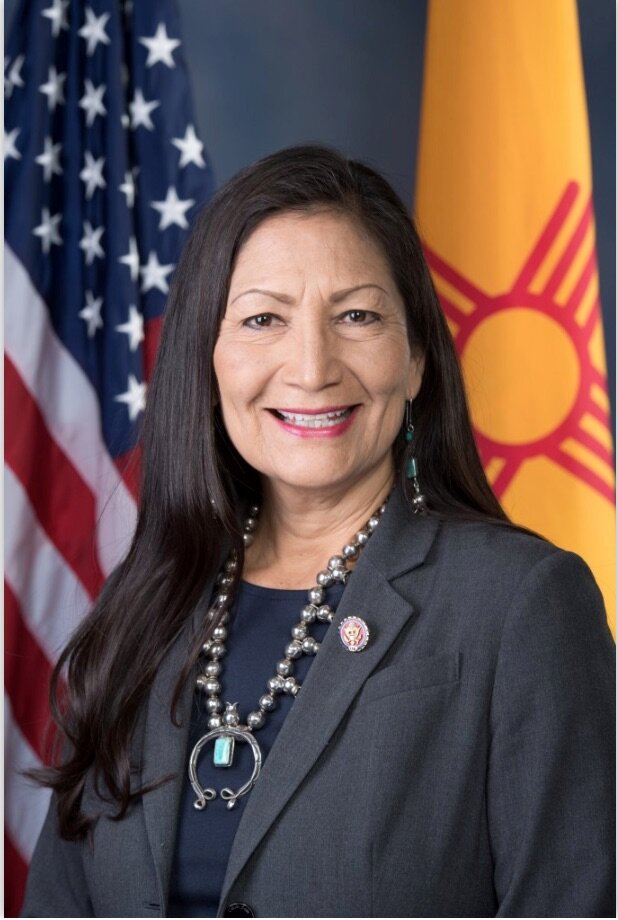
Democrat Sharice Davids, a member of Wisconsin’s Ho-Chunk Nation tribe, defeated four-term Republican incumbent U.S. Rep. Kevin Yoder in Kansas on Tuesday.

Democrat Deb Haaland, a member of the Laguna Pueblo tribe running in New Mexico’s First Congressional District, also won her election.

Democrat Deb Haaland, a member of the Laguna Pueblo tribe running in New Mexico’s First Congressional District, also won her election.

Leading up to the 2020 presidential election, pollsters and demographers talked about the potential impact of the Native American vote on the outcome of the race, especially in key battleground states like Arizona and Nevada, where, three days after the election, votes are still being counted. Also discussed in the lead-up to the election was the difficulty that many Native Americans face in registering to vote and in casting their ballots. Decades of denying this population access to the polls via the systematic violation of their right to vote has led, historically, to lower voter turn-out among Native Americans. (The Library of Congress traces Native Americans’ struggle for voting rights, and the ABA documents how the Native American vote continues to be suppressed.)

Although many still don’t feel entirely welcome at the polls, and efforts to increase Native American voter participation are ongoing, the number of Native Americans elected to national political office is growing. In Tuesday’s election, more Native Americans were elected to Congress than ever before. Six candidates won their races, giving the House a record number of Native members, including Democrats in Kansas (Sharice Davids) and New Mexico (Deb Haaland), who became the first Native American women elected to Congress. This historic achievement, decades in the making, may expand paths of access to the polls for a population of voters long denied their fundamental American right, and inspire Native Americans with political aspirations to seek office in future elections.

In November, as we celebrate Native American Heritage Month at the Harris County Law Library, Ex Libris Juris will highlight the achievements and contributions of Native Americans throughout history. Visit often in the coming weeks to learn more!
The Spirit of the Law

In the spirit of the Halloween season, Harris County Law Library typically displays several spooky selections from our print collection in the Law Library’s exhibit space. This year, Halloween is a little different. Our favorite haunt is closed, but we feel no less spirited about celebrating this happy holiday.

Below are a few items of interest to ghouls and goblins alike. We’ve linked to the online resources whenever possible. Happy haunting!

Burchill v. Hermsmeyer, 212 SW 767 (1919), is the case of the ghost who inspired a contract dispute and a fraud claim. Mr. Hermsmeyer sued to recover the $10,000 he invested in Mrs. Burchill's corporation. She claimed that ghosts, with whom she consulted via a medium, told her there was oil under her land. When no oil was discovered, Mr. Hermsmeyer argued that Ms. Burchill's claim was a fraudulent misrepresentation of facts. The court rejected his argument saying that the existence of ghosts is a matter of belief, not of fact. His claim was, therefore, "insufficient to form a basis for relief for the plaintiff."

Purtell v. Mason, 527 F.3d 615 (2008), involves Halloween yard decorations which caused a neighborhood dispute and raised questions about the right to insult every person on your block. Jeffrey and Vicki Purtell displayed six wooden tombstones in front of their Chicago home, each bearing unflattering references to their neighbors and the details of each person's fictitious demise. One of the neighbors identified on the tombstones argued with Mr. Purtell over the offensive decorations resulting in a call to the police. Officer Bruce Mason arrived at the scene. He arrested Mr. Purtell and ordered the removal of the tombstones. The Purtells asserted their free speech rights, but the Seventh Circuit found no loss of First Amendment Protection under the "fighting words" doctrine. 

The Law of Cadavers and of Burial and Burial Places by Percival E. Jackson is the "standard work on the subject of the law pertaining to the care and disposal of bodies of deceased human beings, and the establishment and maintenance of burial places." Included in this volume is a thorough treatment of the law regarding sepulture along with "approximately a hundred pages of forms pertaining to the regulation of cemeteries, the transfer of plots, graves, and monuments therein and the care, transportation, and burial of human corpses as well as some forms of legal proceedings in both tort and contract, germane to the general subject." (Book Review by Charles G. Coster, 2014.) This title, 2nd edition, is available in the Harris County Law Library's print collection and also via HeinOnline's Legal Classics Library, which you can access via the Law Library’s remote access services.

In the early 1900s, three creative thinkers designed new and improved lanterns in the category of "decorative and grotesque illuminating devices commonly called jackolanterns." (Andrew B. Heard, Patent No. 715,379.) Their patent drawings can be seen here, in the graphics throughout this post.

A final note from the Harris County Law Library staff

This summer, we lost a dear colleague and friend, Ben Pride, a dedicated public servant at the Harris County Law Library for 19 years. In his quiet, thoughtful, and deliberate way, he was an ally for justice. He was warm and welcoming of every library visitor. He was empathetic, patient, and sincere. With great humility and compassion, he served the community he loved. Ben was generous with his time and his spirit, and for that generosity, most of all, he will be remembered. Cornell West famously said, “Justice is what love looks like in public.” Ben Pride embodied this sentiment in his daily work, taking to heart the very mission we all strive to uphold every day at the Law Library. For this and so many other qualities, he is missed.

Ben was also curious, intellectual, funny, and creative. Each of the last three years, he took great pride in assembling the Law Library’s Halloween book art, pictures of which are shown here. While we’re still closed and unable to continue our tradition this year, we definitely had plans to do so. In fact, as we dismantled last year’s display on November 1st, Ben was already suggesting a new idea for Halloween 2020. He envisioned a sugar skull on our shelves, a traditional Mexican folk art symbol used in Día de los Muertos rituals. Placed on an ofrenda in tribute to a departed soul, it honors a beloved spirit and the life lived. Ben would have built another creative display to encourage patrons to “snap a shelfie,” and it would have made everyone smile.

 
Harris County Law Library Book O’Lantern (Halloween 2019)

Harris County Law Library Book O’Lantern (Halloween 2018)

Spooky in the Stacks (Halloween 2019)

Spooky in the Stacks (Halloween 2019)
